Do you know if you have
the best engineering team?
Pensero Benchmark shows exactly where your org stands against real global peers, on real delivery, quality, and AI impact.
Benchmark
How does your organization compare? · Jan 01 – Mar 31
- Delivery per headcount94th percentile
- Defect rate18th percentile
- AI-assisted code87th percentile
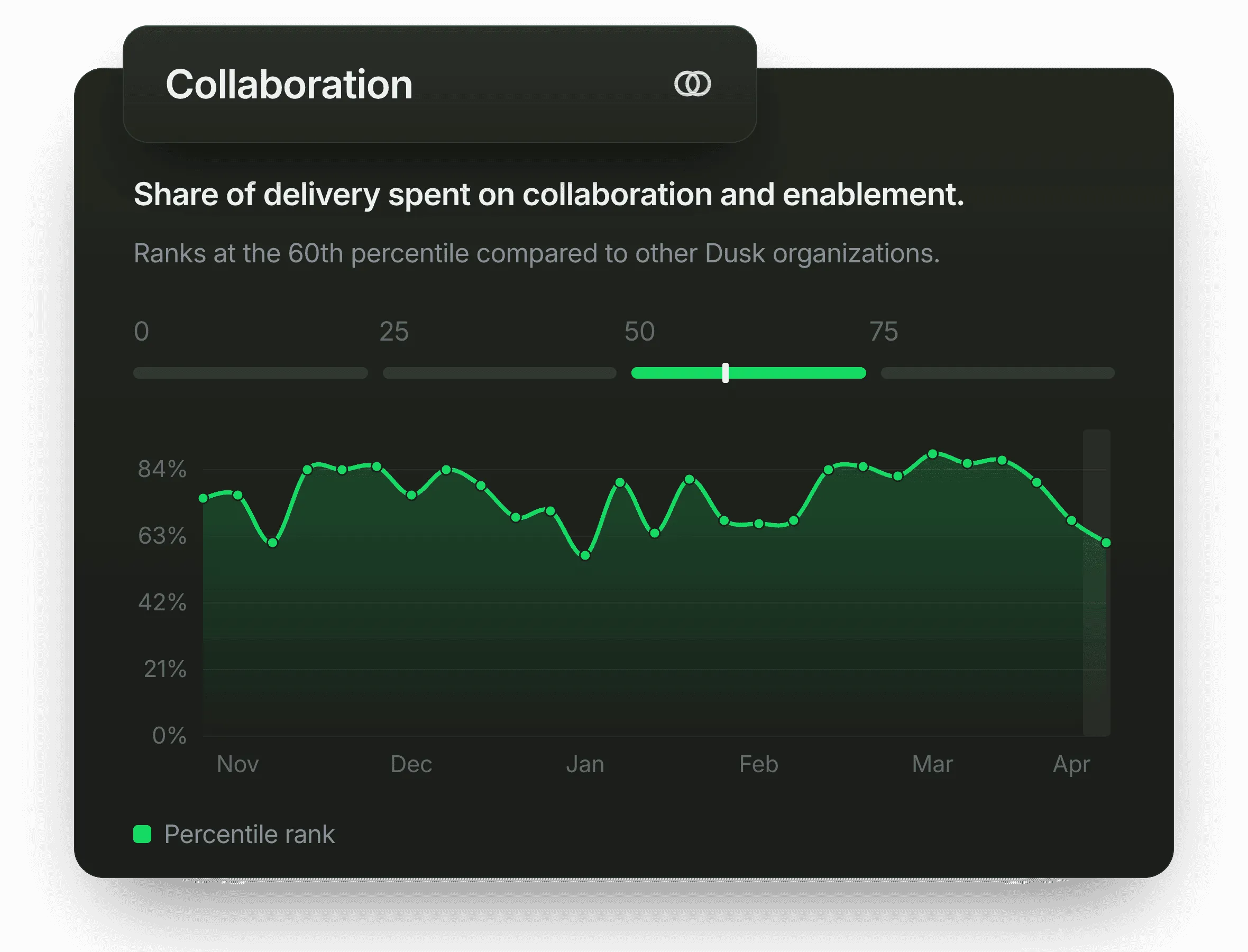
- Collaboration89th percentile
- Innovation rate25th percentile
- Roadmap alignment36th percentile
- Cycle time69th percentile
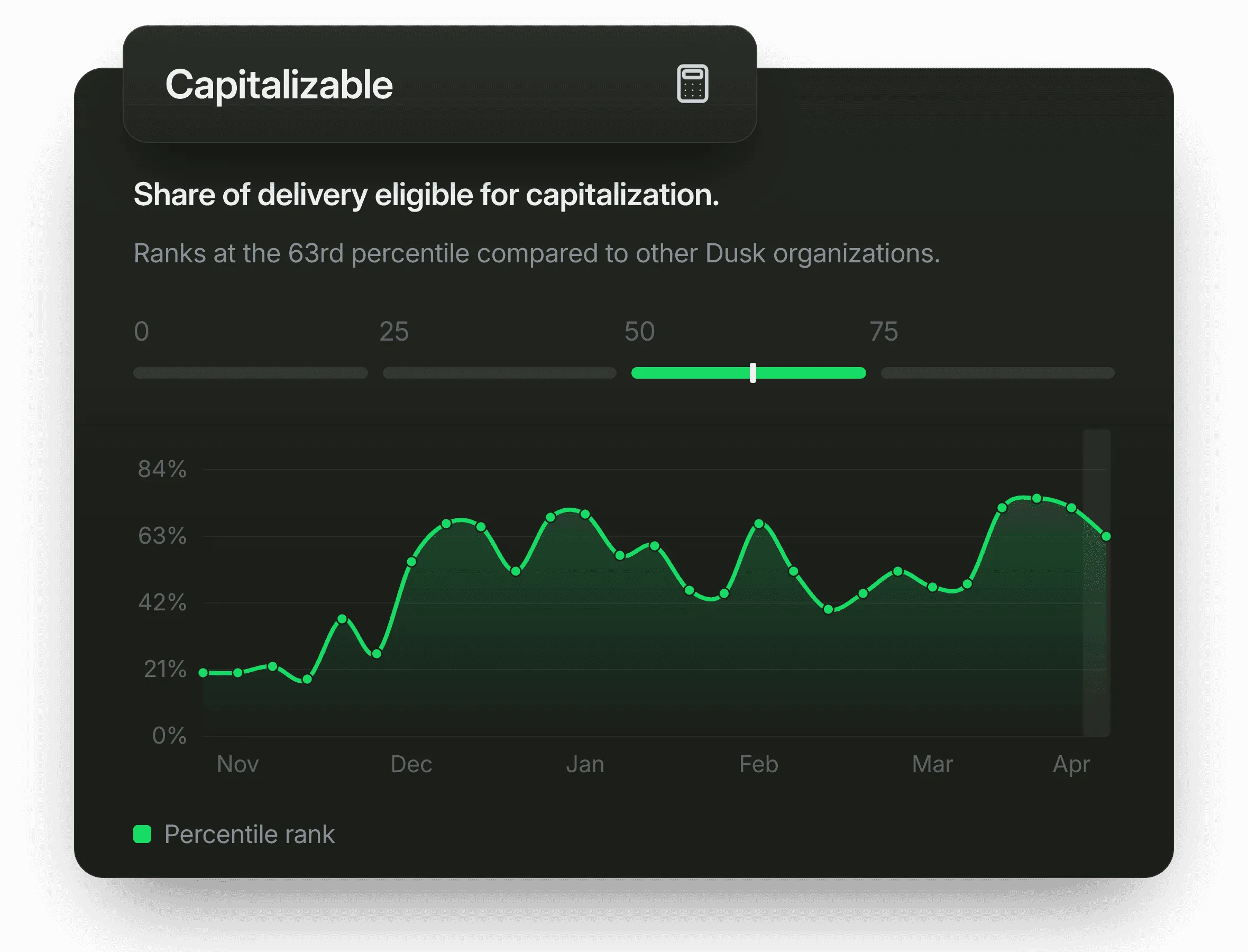
- Capitalizable50th percentile
- Talent density87th percentile
- Knowledge gaps74th percentile
Measuring the agentic workforce at fast-growing companies around the world


The question
Every leadership team is being asked the same question:
“Are we competitive?”
But there's no answer to the only question that actually matters:
Compared to who?
I was being told by the board we were slow to ship, but I didn't have visibility into why. Now our entire team is above the 80th percentile.

- Before
- “Slow to ship”, with no data to explain why.
- After Pensero
- 80th percentile
- entire team, measured against peers
Opinions vs. reality
Other benchmarks are built
on opinions. Pensero is built on reality.
Others benchmarks rely on
- Self-reported surveys
- Generic industry reports
- Vanity metrics ( PRs, deploys, activity)
Pensero benchmarks
- Real production data
- Complexity-weighted delivery
- Actual engineering outcomes
So when you see a percentile, it means something.
Six dimensions
Measure where you stand across 6 dimensions.
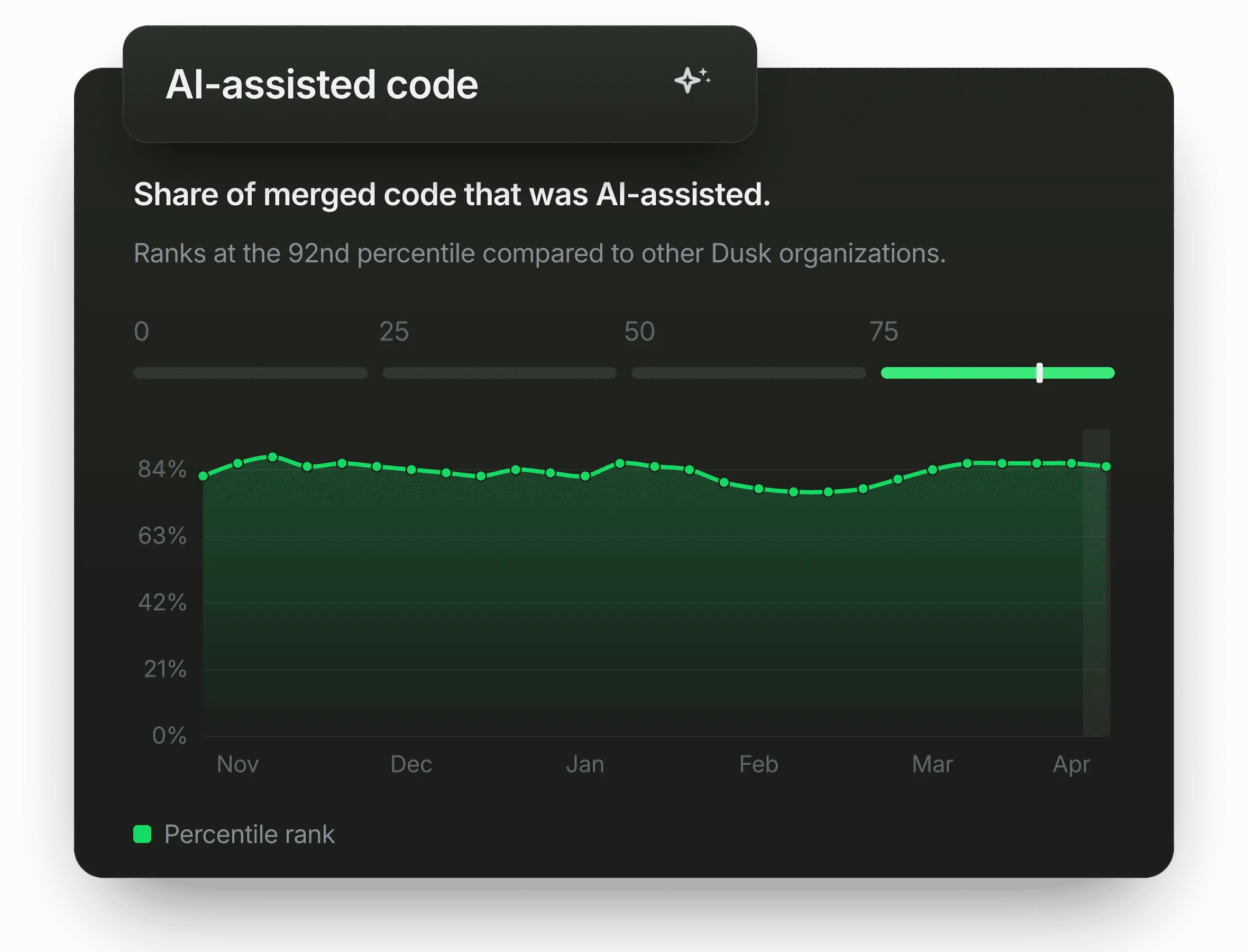
1Know if AI is improving output or just inflating activity
Adoption is visible. Impact is not.
Pensero shows:
- AI-assisted code
So you can answer:
Is AI making us better or just increasing volume?
2Know if quality is holding or breaking
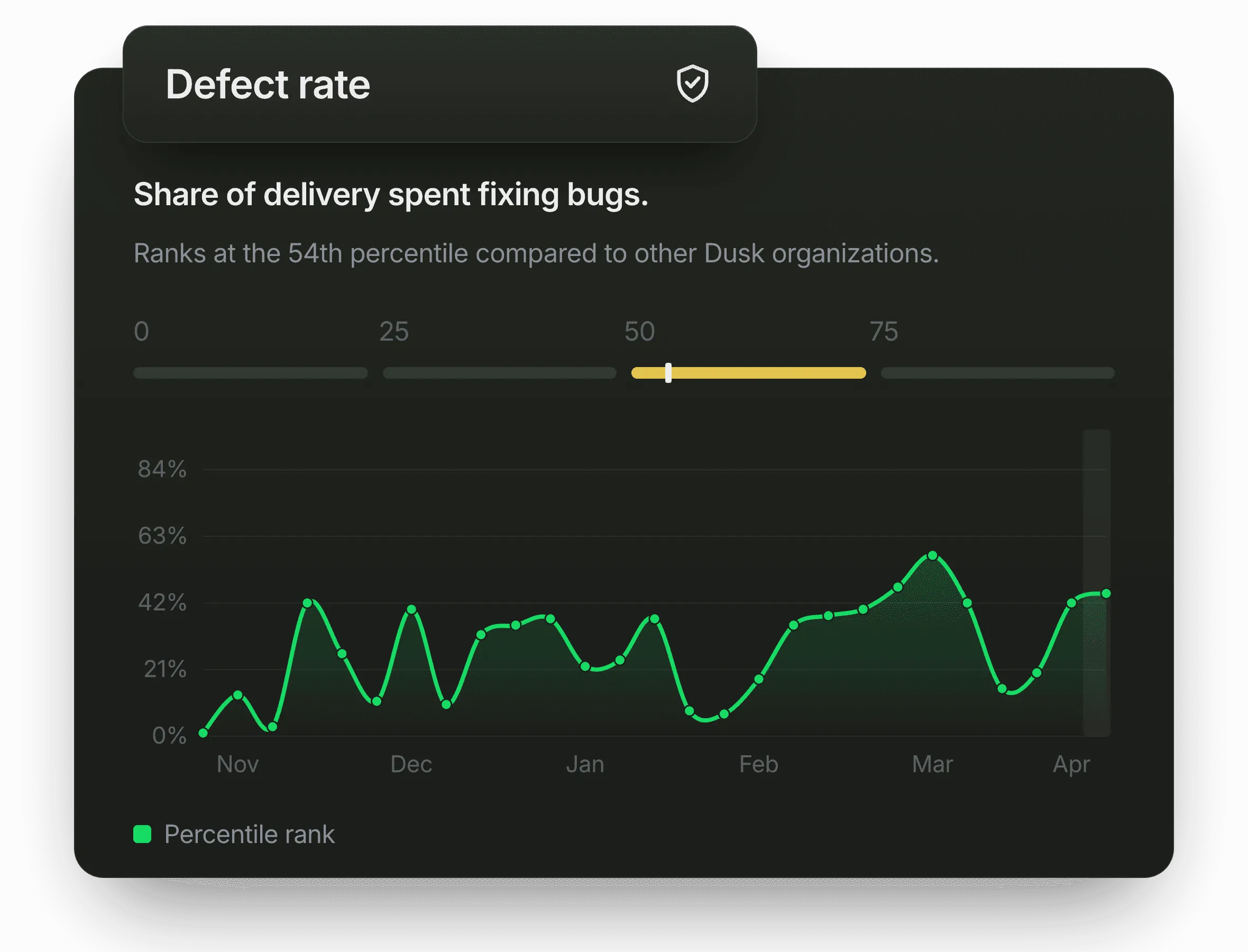
AI makes speed easier. Quality harder.
Pensero shows:
- Defect rate
- Knowledge gaps
So you can answer:
Are we getting faster or creating future problems?
3Know if speed is real or perceived
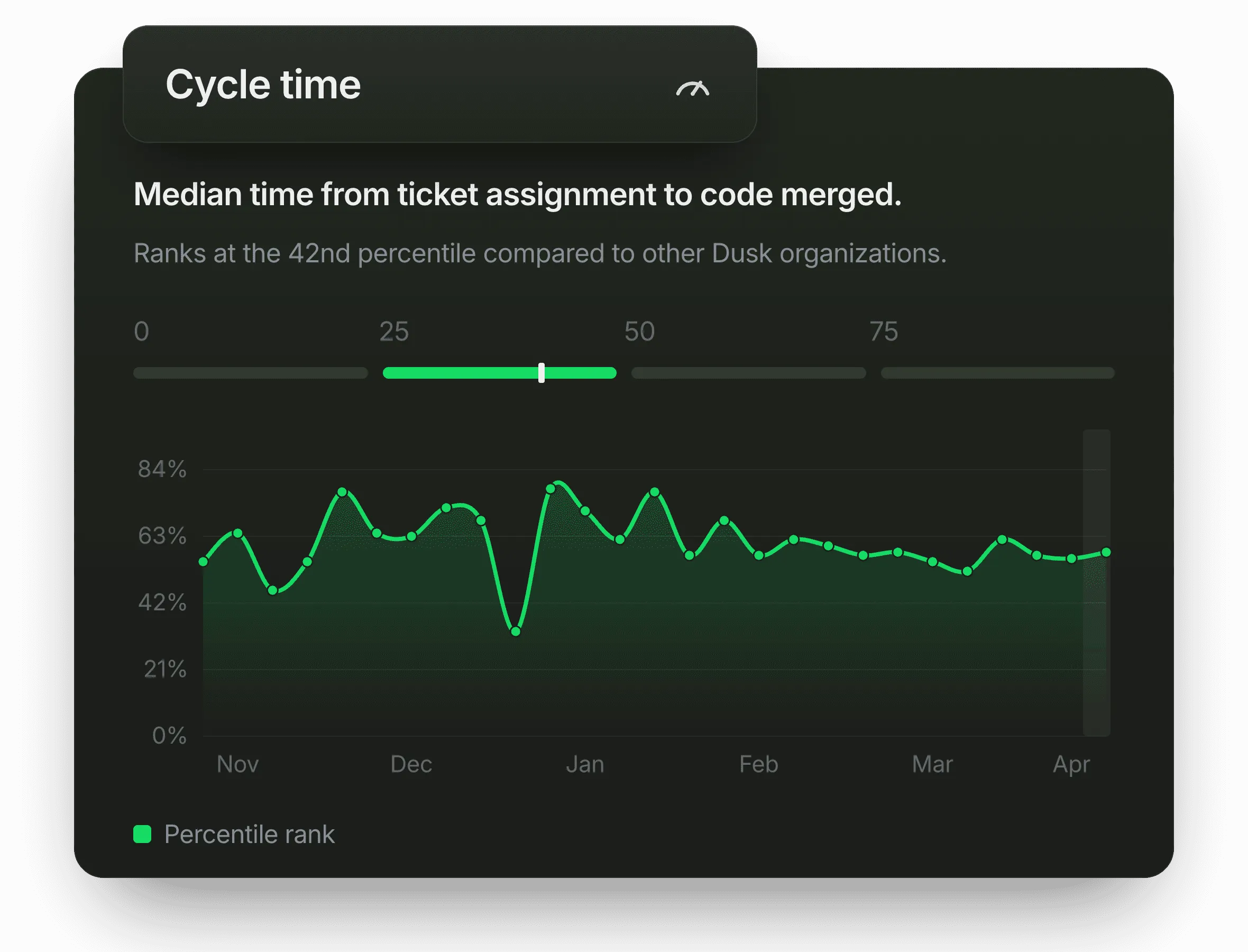
Shipping faster is easy to claim, hard to prove.
Pensero shows:
- Cycle time
So you can answer:
Are we actually moving faster or just shifting work around?
4Know if your team is actually productive
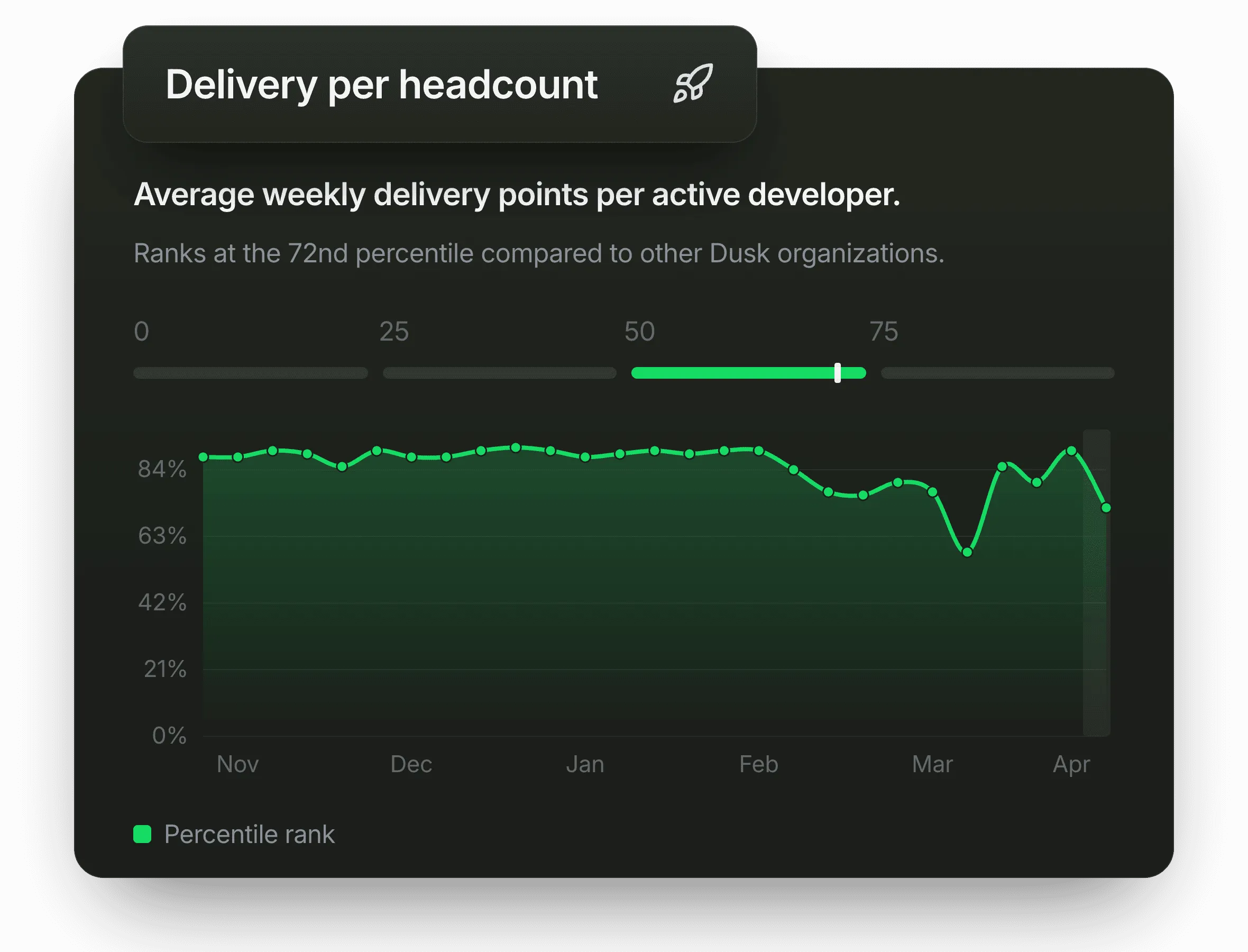
More output doesn’t always mean more impact.
Pensero shows:
- Delivery per headcount
- Innovation rate
- Capitalizable output
So you can answer
Are we truly productive or just busy?
5Know if your engineering investment makes sense
Engineering is one of your largest costs.
Pensero shows:
- Delivery per headcount
- Capitalizable output
- Defect rate
So you can answer:
Are we getting the return we should from what we spend?
6Know if your team is structured to scale
Performance is systemic, not only about individuals.
Pensero shows:
- Contribution distribution
- Collaboration intensity
- Review effectiveness
So you can answer:
Do we have a scalable team or hidden bottlenecks?
One scorecard. Full picture.
One scorecard.
The full picture.
Performance isn't just output. Evaluate delivery, quality, talent and collaboration, then watch where the line is heading.
You don't just see where you are
- 10 performance dimensions
- Percentile ranking (0–100)
- 6-month trend vs. peers
You see
- If you’re catching up
- Pulling ahead
- Or falling behind
Benchmark
How does your organization compare? · Jan 01 – Mar 31
- Delivery per headcount94th percentile
- Defect rate18th percentile
- AI-assisted code87th percentile
- Collaboration89th percentile
- Innovation rate25th percentile
- Roadmap alignment36th percentile
- Cycle time69th percentile
- Capitalizable50th percentile
- Talent density87th percentile
- Knowledge gaps74th percentile
How it works
Get started in minutes. See insights in hours.
Connect your stack. See months of history from day one.
1 hour
Connect & Structure
Integrates repositories, tickets and messages automatically so AI can break work into measurable units, giving your team a unified, transparent view of everything delivered.
1 day
Analyze & Detect
Surface delivery vs roadmap gaps, AI contribution patterns, and execution insights so bottlenecks and early performance drag become visible through evidence-based reviews.
1 week
Report & Decide
Establish a single source of execution truth with team-level and AI vs human performance comparisons, enabling board-ready reporting and confident, scalable capital decisions.
What does a percentile score actually mean?
Each metric is ranked from 0–100 based on all organizations in Pensero. A score of 50 is median. 75 means you outperform 75% of peers.
How do you ensure fair comparisons across different teams and companies?
All metrics are normalized using Pensero’s complexity-weighted delivery model, so teams working on harder problems are not penalized.
Can I track improvement over time?
Yes. Every metric includes a 6-month trend showing how you evolve relative to peers not just relative to your past performance.
Can I measure the impact of AI adoption?
Yes. Benchmark shows your AI adoption rate compared to other organizations, alongside delivery and quality metrics to give full context.