What You Need to Know about Keypup Pricing in 2026

A complete breakdown of Keypup pricing. Learn how repository-based billing works, real costs by team size, hidden fees, and how it compares to alternatives like Pensero.

Keypup uses a unique pricing model based on connected repositories and projects rather than traditional per-seat pricing. 

While this approach offers advantages for certain team configurations, understanding the total cost implications, feature limitations, and alternatives helps engineering leaders make informed decisions about platform investments.

This comprehensive guide examines Keypup's pricing structure, calculates real costs for different team sizes, explains what's included and what costs extra, and compares pricing against alternatives like Pensero that might offer better value for specific organizational needs.

Understanding Keypup's Pricing Model

Keypup bills based on "units" where each unit represents one connected repository or project with software delivery management implications. The platform includes unlimited users and historical data access at all pricing tiers, eliminating common constraints that other platforms impose through user-based pricing models.

Base Pricing Structure

  • Minimum package: $99/month (billed annually with 20% discount) or $123.75/month (monthly billing) for up to 2 units (repositories/projects)

  • Volume-based degressive pricing: Costs per additional unit decrease as you connect more repositories, though Keypup doesn't publish the complete pricing scale publicly for higher volumes

  • Annual vs. monthly billing: 20% discount for annual commitment versus monthly flexibility

  • Free trial: 14 days to evaluate platform before commitment

What "Unlimited Users" Really Means

Keypup emphasizes unlimited users as key differentiator from per-seat pricing competitors. This creates significant value for organizations with:

  • Large teams working on few repositories: A 50-person team working on 2-3 main repositories pays only the base package price regardless of team size

  • Multiple stakeholders needing visibility: Product managers, executives, and external stakeholders can access platform without incrementing costs

  • Fluctuating team sizes: Adding or removing team members doesn't affect subscription costs

However, this pricing advantage reverses for organizations with different repository structures.

Repository-Based Pricing Challenges

The repository-based model creates cost challenges for organizations with:

  • Microservices architectures: Teams maintaining 20+ microservice repositories face substantially higher costs than monorepo architectures despite similar team sizes

  • Multi-product companies: Organizations with separate repositories for web, mobile, backend, and infrastructure see costs multiply quickly

  • Open source contributions: Companies maintaining both internal and open source repositories must connect all relevant repos for complete visibility

  • Legacy repository structures: Organizations with historical repository proliferation pay for architectural decisions made before considering analytics tool pricing implications

Calculating Real Costs: Scenarios

Understanding actual costs requires calculating based on your specific repository configuration rather than team size alone.

Small Team, Few Repositories

Configuration: 15 engineers working on 2 main repositories (web + mobile)

Keypup cost: $99/month (annual) = $1,188/year

Per-engineer cost: $79.20/year or $6.60/month per engineer

Analysis: Excellent value proposition for this configuration. Unlimited users with comprehensive features at minimal cost makes Keypup compelling for small teams with consolidated repository structures.

Medium Team, Microservices Architecture

Configuration: 30 engineers maintaining 15 microservice repositories

Keypup cost: Not publicly disclosed for 15 units, requires custom quote

Estimate: Based on degressive pricing patterns, likely $400-600/month

Per-engineer cost: Approximately $160-240/year or $13.33-20/month per engineer

Analysis: Still reasonable compared to per-seat alternatives charging $40-80 per user monthly, but advantage diminishes as repository count increases.

Large Team, Complex Infrastructure

Configuration: 100 engineers across 50 repositories (microservices, tools, infrastructure, mobile apps, data pipelines)

Keypup cost: "Contact us" territory - likely $1,500-2,500/month based on volume pricing

Per-engineer cost: Approximately $180-300/year or $15-25/month per engineer

Analysis: Competitive with enterprise platforms but no longer dramatically cheaper. Repository consolidation could reduce costs but requires architectural changes driven by analytics pricing rather than technical merit.

What's Included vs. What Costs Extra

Understanding base subscription versus additional costs prevents budget surprises.

Included in Base Pricing

Full platform access:

  • All 80+ metrics and reports without feature gating

  • 14+ topical dashboards covering DORA, code review, deployment, etc.

  • Unlimited historical data access without time-based restrictions

  • Custom report building with full flexibility

  • AI assistant for natural language insights queries

Integrations:

  • All major Git solutions (GitHub, GitLab Cloud & Self-Hosted, Bitbucket Cloud & Data Center)

  • Project management tools (Jira Cloud & Data Center, GitHub Projects, Trello, ClickUp)

  • No additional fees for integration connections

Users and access:

  • Unlimited platform users across all roles

  • No restrictions on stakeholder or read-only access

  • Standard authentication and access controls

Support:

  • Standard technical support via email

  • Subscription and user management assistance

  • Technical troubleshooting for platform issues

Additional Costs: Product Expert Support

Keypup offers optional "Product Expert Support" representing significant additional investment:

Onboarding period (first 3 months):

  • $499 base + $1 per connected unit monthly

  • Example: 20 repositories = $519/month for first 3 months

Ongoing support:

  • $999 base + $1 per connected unit monthly

  • Example: 20 repositories = $1,019/month ongoing

Included services:

  • Dedicated account manager and product expert

  • Priority support via in-platform chat and dedicated email

  • Custom insights creation and delivery (up to 5 hours monthly)

  • Custom dashboard creation and delivery

Analysis: Product Expert Support potentially doubles or triples total platform costs. While providing valuable hands-on assistance, organizations must evaluate whether this investment delivers ROI versus platforms providing comprehensive insights automatically without requiring expert interpretation services.

Hidden Costs and Considerations

Beyond stated pricing, several factors affect total cost of ownership.

Implementation Time and Expertise Required

Keypup's comprehensive customization capabilities require significant setup investment:

Dashboard configuration: Selecting and customizing from 80+ metrics requires understanding which measurements matter for your organization and how to configure them appropriately

Report template evaluation: Determining which of 14+ topical dashboards serve your needs and customizing them for organizational context takes analytical expertise

Metrics interpretation: Understanding what DORA metrics, cycle times, and other measurements reveal about team performance requires framework knowledge that not all engineering leaders possess

Ongoing maintenance: Dashboards require updates as organizational priorities evolve, metrics need recalibration, and new repositories get added requiring configuration decisions.

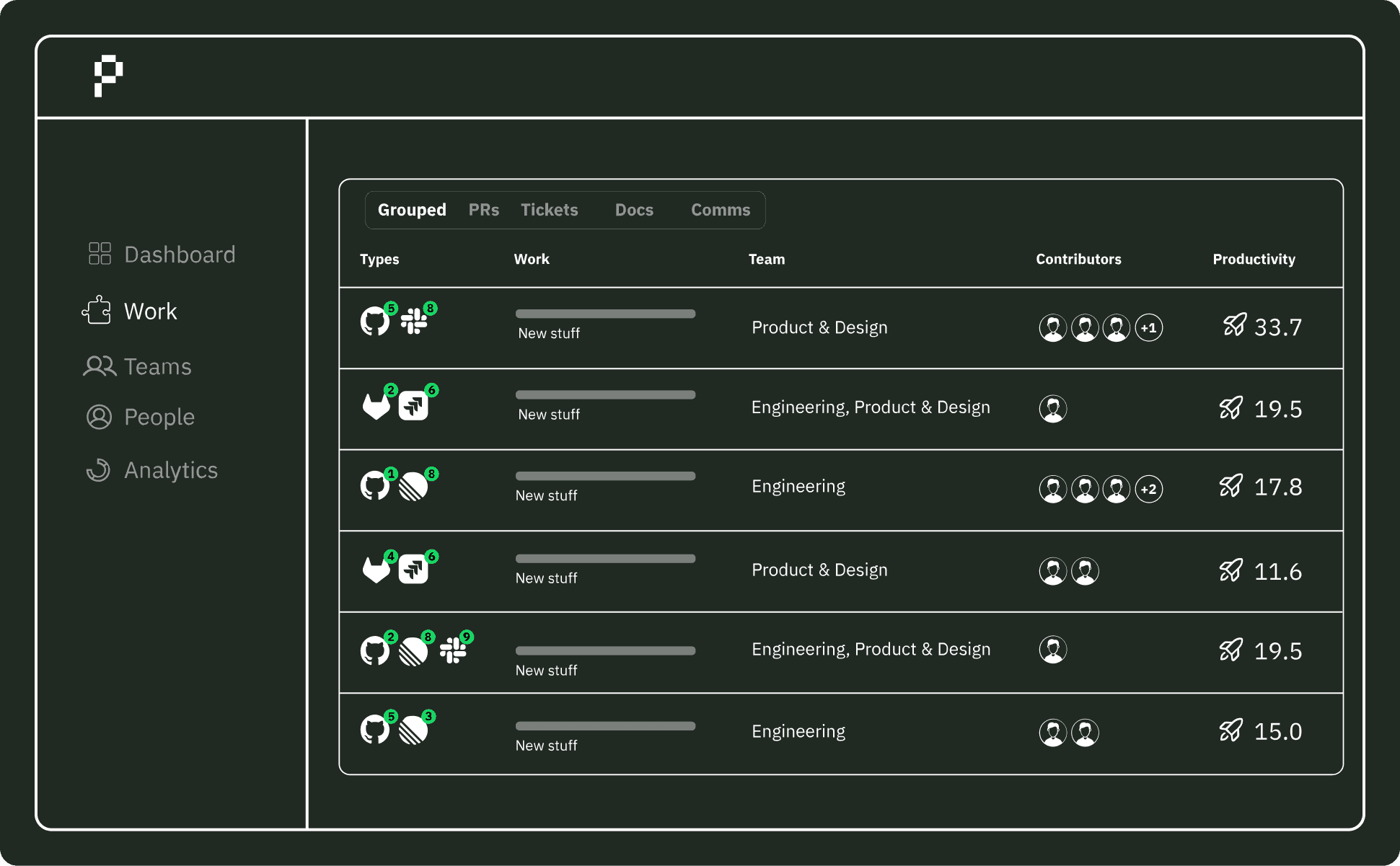
This view illustrates the operational reality behind repository-based analytics tools: large volumes of work data broken down by repositories and contributors, which often require ongoing configuration and expert interpretation to turn into decisions.
Product Expert Support Dependency

The optional Product Expert Support pricing suggests potential platform complexity:

Why experts needed: If platform insights were immediately actionable without interpretation, why would substantial portion of customers require $1,000+/month expert assistance?

Interpretation overhead: Metrics dashboards showing data require human expertise translating measurements into actionable recommendations, creating ongoing dependency

Custom insight creation: The 5-hour monthly allocation for custom insights suggests that standard platform capabilities may not answer all questions organizations need addressed

Long-term costs: Organizations becoming dependent on Product Expert Support face perpetual additional costs rather than one-time implementation investments

Repository Architecture Lock-In

Pricing model creates perverse incentives affecting technical decisions:

Monorepo pressure: Teams might consolidate repositories to reduce analytics costs even when separate repositories serve valid technical purposes

Microservices penalty: Organizations pay premium for modern microservices architectures versus legacy monolithic structures purely due to analytics pricing model

Repository proliferation deterrent: Creating new repositories for experimental projects, tools, or infrastructure incurs immediate analytics cost increases regardless of repository activity levels

Comparing Keypup Pricing to 3 Alternatives

Understanding value requires comparing total costs and included capabilities against alternatives.

1. Pensero: Transparent Per-Seat Pricing with Immediate Insights

Pricing model: Free for up to 10 engineers and 1 repository; $50/month premium tier; custom enterprise pricing

Key differences:

  • Immediate actionable insights: Executive Summaries and "What Happened Yesterday" provide clear understanding without requiring dashboard configuration or metrics interpretation

  • No hidden costs: Premium tier includes comprehensive capabilities without requiring expert support services for insight extraction

  • Repository-agnostic: Cost based on team size rather than repository architecture, eliminating perverse technical incentives

  • Engineering-specific intelligence: Body of Work Analysis and AI Cycle Analysis provide depth beyond generic metrics dashboards

Cost comparison for 30-engineer team with 15 repositories:

  • Keypup: ~$400-600/month base + potentially $1,000+/month for Product Expert Support = $1,400-1,600/month

  • Pensero: $50/month premium tier for actionable insights without interpretation overhead

Value analysis: Pensero provides clear engineering intelligence immediately rather than comprehensive dashboards requiring ongoing interpretation. For teams wanting insights over measurement, substantially lower costs with included actionable recommendations versus metrics requiring expert translation.

2. LinearB: Competitive Per-Seat Pricing with Automation

Pricing model: Free tier available; Business tier at $49/seat/month

Key differences:

  • Per-seat pricing: Costs scale with team size rather than repository count

  • Workflow automation included: Improvement tools alongside metrics without additional expert support requirements

  • Free tier value: Provides basic DORA metrics without cost for initial evaluation beyond trial period

Cost comparison for 30-engineer team:

  • Keypup: ~$400-600/month for 15 repositories

  • LinearB Business: $1,470/month (30 seats × $49)

Analysis: LinearB costs more for medium teams but includes workflow automation and doesn't penalize microservices architectures. For larger teams with consolidated repositories, Keypup offers better value if pure measurement suffices without automation needs.

3. Jellyfish: Enterprise Pricing for Business Alignment

Pricing model: Custom enterprise pricing, estimated $30-62.50/seat/month in annual contracts

Key differences:

  • Business context included: Resource allocation, investment tracking, and DevFinOps capabilities provide stakeholder communication tools

  • Enterprise focus: Targets larger organizations (100+ engineers) where business alignment matters more than cost optimization

  • Comprehensive platform: Includes capabilities beyond metrics dashboards without requiring expert support add-ons

Cost comparison for 100-engineer team:

  • Keypup: ~$1,500-2,500/month for 50 repositories + potential expert support

  • Jellyfish: ~$3,000-6,000/month but includes business alignment capabilities

Analysis: Jellyfish costs more but provides business context that Keypup's metrics dashboards lack. For enterprise organizations needing CFO communication, the premium justifies comprehensive capabilities versus pure engineering metrics.

Who Should Choose Keypup Pricing

Keypup's repository-based pricing creates compelling value for specific organizational profiles while proving expensive for others.

Ideal Keypup Customers

  • Large teams with consolidated repositories: Organizations with 50+ engineers working on 5-10 main repositories maximize unlimited user benefits while minimizing repository costs

  • Monorepo architectures: Teams maintaining single comprehensive repository pay minimal costs regardless of team size

  • Metrics-comfortable leadership: Engineering leaders with framework expertise who can interpret dashboards without requiring expert assistance avoid Product Expert Support costs

  • Customization preferences: Teams wanting complete control over dashboard configuration and report customization benefit from Keypup's flexibility

4 Poor Fit Scenarios

  1. Microservices architectures: Teams maintaining 20+ repositories face costs comparable to per-seat alternatives without repository pricing advantages

  2. Small teams needing quick insights: Organizations with 10-20 engineers benefit more from platforms providing immediate actionable intelligence rather than comprehensive dashboards requiring interpretation investment

  3. Limited analytics expertise: Teams lacking metrics interpretation capabilities face additional Product Expert Support costs that eliminate repository-based pricing advantages

  4. Stakeholder communication priority: Organizations needing clear executive updates benefit from platforms providing plain language insights versus metrics dashboards requiring translation

Making the Pricing Decision

Evaluating Keypup pricing requires calculating total costs including potential hidden expenses and comparing against alternatives addressing specific organizational needs.

Calculate Your True Costs

  • Base subscription: Use Keypup's calculator with actual repository count for accurate base pricing

  • Product Expert Support: Honestly assess whether your team possesses metrics expertise to extract value independently or requires ongoing expert interpretation assistance

  • Implementation time: Calculate engineering leadership hours required for dashboard configuration, metrics interpretation learning, and ongoing maintenance

  • Opportunity costs: Consider whether time spent configuring dashboards and interpreting metrics could deliver more value applied to actual engineering leadership activities

Consider Alternative Value Propositions

  • Pensero for immediate insights: If you need actionable intelligence without metrics interpretation overhead, substantially lower costs with included recommendations provide better value than comprehensive dashboards requiring expert translation

  • LinearB for workflow automation: If you want improvement tools alongside metrics, per-seat pricing with included automation may justify higher nominal costs through productivity gains

  • Jellyfish for business alignment: If stakeholder communication matters more than cost optimization, enterprise pricing with business context capabilities serves executive needs better than pure engineering metrics

Free Tier Strategy

Start with Pensero's free tier: Up to 10 engineers and 1 repository provides genuine value for smallest teams or initial evaluation without requiring 14-day trial pressure

Evaluate during Keypup trial: Use 14-day period to honestly assess whether metrics dashboards provide actionable insights independently or require ongoing interpretation that suggests Product Expert Support dependency

Compare actual usage: During trials, track whether you use platforms for quick insight access or spend time configuring dashboards and interpreting metrics visualizations

The Bottom Line on Keypup Pricing

Keypup's repository-based pricing creates compelling value for large teams with consolidated repositories who possess metrics expertise for independent dashboard interpretation. The unlimited users and comprehensive feature access at base pricing tiers serve specific organizational configurations well.

However, several factors complicate value assessment:

Hidden costs through Product Expert Support dependency suggest platform complexity requiring ongoing interpretation assistance that potentially doubles or triples stated pricing

Repository-based billing penalizes modern microservices architectures while rewarding legacy monorepo structures, creating perverse technical incentives driven by analytics pricing rather than engineering merit

Comprehensive dashboards require interpretation expertise that not all engineering leaders possess or want to develop, creating ongoing overhead extracting value from measurement capabilities

Alternative platforms provide immediate actionable intelligence at lower total costs for teams wanting insights over comprehensive measurement requiring constant monitoring and interpretation

Pensero stands out for teams prioritizing actionable insights over comprehensive dashboards. The free tier for up to 10 engineers provides genuine value for smallest teams, while $50/month premium tier delivers clear engineering intelligence without dashboard configuration overhead or interpretation dependency that Keypup's model creates.

Consider your actual needs: Do you want measurement dashboards providing comprehensive data requiring interpretation, or intelligence delivering actionable insights immediately? Your answer determines whether Keypup's pricing represents value or whether alternatives like Pensero provide better return on investment for your specific organizational context.

Start with Pensero's free tier to experience engineering intelligence that delivers insights immediately rather than requiring dashboard configuration and metrics interpretation before becoming useful. The best pricing isn't the lowest nominal cost but the investment delivering maximum value through insights you can actually use without becoming metrics specialist as shown by software development KPIs.

Keypup uses a unique pricing model based on connected repositories and projects rather than traditional per-seat pricing. 

While this approach offers advantages for certain team configurations, understanding the total cost implications, feature limitations, and alternatives helps engineering leaders make informed decisions about platform investments.

This comprehensive guide examines Keypup's pricing structure, calculates real costs for different team sizes, explains what's included and what costs extra, and compares pricing against alternatives like Pensero that might offer better value for specific organizational needs.

Understanding Keypup's Pricing Model

Keypup bills based on "units" where each unit represents one connected repository or project with software delivery management implications. The platform includes unlimited users and historical data access at all pricing tiers, eliminating common constraints that other platforms impose through user-based pricing models.

Base Pricing Structure

  • Minimum package: $99/month (billed annually with 20% discount) or $123.75/month (monthly billing) for up to 2 units (repositories/projects)

  • Volume-based degressive pricing: Costs per additional unit decrease as you connect more repositories, though Keypup doesn't publish the complete pricing scale publicly for higher volumes

  • Annual vs. monthly billing: 20% discount for annual commitment versus monthly flexibility

  • Free trial: 14 days to evaluate platform before commitment

What "Unlimited Users" Really Means

Keypup emphasizes unlimited users as key differentiator from per-seat pricing competitors. This creates significant value for organizations with:

  • Large teams working on few repositories: A 50-person team working on 2-3 main repositories pays only the base package price regardless of team size

  • Multiple stakeholders needing visibility: Product managers, executives, and external stakeholders can access platform without incrementing costs

  • Fluctuating team sizes: Adding or removing team members doesn't affect subscription costs

However, this pricing advantage reverses for organizations with different repository structures.

Repository-Based Pricing Challenges

The repository-based model creates cost challenges for organizations with:

  • Microservices architectures: Teams maintaining 20+ microservice repositories face substantially higher costs than monorepo architectures despite similar team sizes

  • Multi-product companies: Organizations with separate repositories for web, mobile, backend, and infrastructure see costs multiply quickly

  • Open source contributions: Companies maintaining both internal and open source repositories must connect all relevant repos for complete visibility

  • Legacy repository structures: Organizations with historical repository proliferation pay for architectural decisions made before considering analytics tool pricing implications

Calculating Real Costs: Scenarios

Understanding actual costs requires calculating based on your specific repository configuration rather than team size alone.

Small Team, Few Repositories

Configuration: 15 engineers working on 2 main repositories (web + mobile)

Keypup cost: $99/month (annual) = $1,188/year

Per-engineer cost: $79.20/year or $6.60/month per engineer

Analysis: Excellent value proposition for this configuration. Unlimited users with comprehensive features at minimal cost makes Keypup compelling for small teams with consolidated repository structures.

Medium Team, Microservices Architecture

Configuration: 30 engineers maintaining 15 microservice repositories

Keypup cost: Not publicly disclosed for 15 units, requires custom quote

Estimate: Based on degressive pricing patterns, likely $400-600/month

Per-engineer cost: Approximately $160-240/year or $13.33-20/month per engineer

Analysis: Still reasonable compared to per-seat alternatives charging $40-80 per user monthly, but advantage diminishes as repository count increases.

Large Team, Complex Infrastructure

Configuration: 100 engineers across 50 repositories (microservices, tools, infrastructure, mobile apps, data pipelines)

Keypup cost: "Contact us" territory - likely $1,500-2,500/month based on volume pricing

Per-engineer cost: Approximately $180-300/year or $15-25/month per engineer

Analysis: Competitive with enterprise platforms but no longer dramatically cheaper. Repository consolidation could reduce costs but requires architectural changes driven by analytics pricing rather than technical merit.

What's Included vs. What Costs Extra

Understanding base subscription versus additional costs prevents budget surprises.

Included in Base Pricing

Full platform access:

  • All 80+ metrics and reports without feature gating

  • 14+ topical dashboards covering DORA, code review, deployment, etc.

  • Unlimited historical data access without time-based restrictions

  • Custom report building with full flexibility

  • AI assistant for natural language insights queries

Integrations:

  • All major Git solutions (GitHub, GitLab Cloud & Self-Hosted, Bitbucket Cloud & Data Center)

  • Project management tools (Jira Cloud & Data Center, GitHub Projects, Trello, ClickUp)

  • No additional fees for integration connections

Users and access:

  • Unlimited platform users across all roles

  • No restrictions on stakeholder or read-only access

  • Standard authentication and access controls

Support:

  • Standard technical support via email

  • Subscription and user management assistance

  • Technical troubleshooting for platform issues

Additional Costs: Product Expert Support

Keypup offers optional "Product Expert Support" representing significant additional investment:

Onboarding period (first 3 months):

  • $499 base + $1 per connected unit monthly

  • Example: 20 repositories = $519/month for first 3 months

Ongoing support:

  • $999 base + $1 per connected unit monthly

  • Example: 20 repositories = $1,019/month ongoing

Included services:

  • Dedicated account manager and product expert

  • Priority support via in-platform chat and dedicated email

  • Custom insights creation and delivery (up to 5 hours monthly)

  • Custom dashboard creation and delivery

Analysis: Product Expert Support potentially doubles or triples total platform costs. While providing valuable hands-on assistance, organizations must evaluate whether this investment delivers ROI versus platforms providing comprehensive insights automatically without requiring expert interpretation services.

Hidden Costs and Considerations

Beyond stated pricing, several factors affect total cost of ownership.

Implementation Time and Expertise Required

Keypup's comprehensive customization capabilities require significant setup investment:

Dashboard configuration: Selecting and customizing from 80+ metrics requires understanding which measurements matter for your organization and how to configure them appropriately

Report template evaluation: Determining which of 14+ topical dashboards serve your needs and customizing them for organizational context takes analytical expertise

Metrics interpretation: Understanding what DORA metrics, cycle times, and other measurements reveal about team performance requires framework knowledge that not all engineering leaders possess

Ongoing maintenance: Dashboards require updates as organizational priorities evolve, metrics need recalibration, and new repositories get added requiring configuration decisions.

This view illustrates the operational reality behind repository-based analytics tools: large volumes of work data broken down by repositories and contributors, which often require ongoing configuration and expert interpretation to turn into decisions.

Product Expert Support Dependency

The optional Product Expert Support pricing suggests potential platform complexity:

Why experts needed: If platform insights were immediately actionable without interpretation, why would substantial portion of customers require $1,000+/month expert assistance?

Interpretation overhead: Metrics dashboards showing data require human expertise translating measurements into actionable recommendations, creating ongoing dependency

Custom insight creation: The 5-hour monthly allocation for custom insights suggests that standard platform capabilities may not answer all questions organizations need addressed

Long-term costs: Organizations becoming dependent on Product Expert Support face perpetual additional costs rather than one-time implementation investments

Repository Architecture Lock-In

Pricing model creates perverse incentives affecting technical decisions:

Monorepo pressure: Teams might consolidate repositories to reduce analytics costs even when separate repositories serve valid technical purposes

Microservices penalty: Organizations pay premium for modern microservices architectures versus legacy monolithic structures purely due to analytics pricing model

Repository proliferation deterrent: Creating new repositories for experimental projects, tools, or infrastructure incurs immediate analytics cost increases regardless of repository activity levels

Comparing Keypup Pricing to 3 Alternatives

Understanding value requires comparing total costs and included capabilities against alternatives.

1. Pensero: Transparent Per-Seat Pricing with Immediate Insights

Pricing model: Free for up to 10 engineers and 1 repository; $50/month premium tier; custom enterprise pricing

Key differences:

  • Immediate actionable insights: Executive Summaries and "What Happened Yesterday" provide clear understanding without requiring dashboard configuration or metrics interpretation

  • No hidden costs: Premium tier includes comprehensive capabilities without requiring expert support services for insight extraction

  • Repository-agnostic: Cost based on team size rather than repository architecture, eliminating perverse technical incentives

  • Engineering-specific intelligence: Body of Work Analysis and AI Cycle Analysis provide depth beyond generic metrics dashboards

Cost comparison for 30-engineer team with 15 repositories:

  • Keypup: ~$400-600/month base + potentially $1,000+/month for Product Expert Support = $1,400-1,600/month

  • Pensero: $50/month premium tier for actionable insights without interpretation overhead

Value analysis: Pensero provides clear engineering intelligence immediately rather than comprehensive dashboards requiring ongoing interpretation. For teams wanting insights over measurement, substantially lower costs with included actionable recommendations versus metrics requiring expert translation.

2. LinearB: Competitive Per-Seat Pricing with Automation

Pricing model: Free tier available; Business tier at $49/seat/month

Key differences:

  • Per-seat pricing: Costs scale with team size rather than repository count

  • Workflow automation included: Improvement tools alongside metrics without additional expert support requirements

  • Free tier value: Provides basic DORA metrics without cost for initial evaluation beyond trial period

Cost comparison for 30-engineer team:

  • Keypup: ~$400-600/month for 15 repositories

  • LinearB Business: $1,470/month (30 seats × $49)

Analysis: LinearB costs more for medium teams but includes workflow automation and doesn't penalize microservices architectures. For larger teams with consolidated repositories, Keypup offers better value if pure measurement suffices without automation needs.

3. Jellyfish: Enterprise Pricing for Business Alignment

Pricing model: Custom enterprise pricing, estimated $30-62.50/seat/month in annual contracts

Key differences:

  • Business context included: Resource allocation, investment tracking, and DevFinOps capabilities provide stakeholder communication tools

  • Enterprise focus: Targets larger organizations (100+ engineers) where business alignment matters more than cost optimization

  • Comprehensive platform: Includes capabilities beyond metrics dashboards without requiring expert support add-ons

Cost comparison for 100-engineer team:

  • Keypup: ~$1,500-2,500/month for 50 repositories + potential expert support

  • Jellyfish: ~$3,000-6,000/month but includes business alignment capabilities

Analysis: Jellyfish costs more but provides business context that Keypup's metrics dashboards lack. For enterprise organizations needing CFO communication, the premium justifies comprehensive capabilities versus pure engineering metrics.

Who Should Choose Keypup Pricing

Keypup's repository-based pricing creates compelling value for specific organizational profiles while proving expensive for others.

Ideal Keypup Customers

  • Large teams with consolidated repositories: Organizations with 50+ engineers working on 5-10 main repositories maximize unlimited user benefits while minimizing repository costs

  • Monorepo architectures: Teams maintaining single comprehensive repository pay minimal costs regardless of team size

  • Metrics-comfortable leadership: Engineering leaders with framework expertise who can interpret dashboards without requiring expert assistance avoid Product Expert Support costs

  • Customization preferences: Teams wanting complete control over dashboard configuration and report customization benefit from Keypup's flexibility

4 Poor Fit Scenarios

  1. Microservices architectures: Teams maintaining 20+ repositories face costs comparable to per-seat alternatives without repository pricing advantages

  2. Small teams needing quick insights: Organizations with 10-20 engineers benefit more from platforms providing immediate actionable intelligence rather than comprehensive dashboards requiring interpretation investment

  3. Limited analytics expertise: Teams lacking metrics interpretation capabilities face additional Product Expert Support costs that eliminate repository-based pricing advantages

  4. Stakeholder communication priority: Organizations needing clear executive updates benefit from platforms providing plain language insights versus metrics dashboards requiring translation

Making the Pricing Decision

Evaluating Keypup pricing requires calculating total costs including potential hidden expenses and comparing against alternatives addressing specific organizational needs.

Calculate Your True Costs

  • Base subscription: Use Keypup's calculator with actual repository count for accurate base pricing

  • Product Expert Support: Honestly assess whether your team possesses metrics expertise to extract value independently or requires ongoing expert interpretation assistance

  • Implementation time: Calculate engineering leadership hours required for dashboard configuration, metrics interpretation learning, and ongoing maintenance

  • Opportunity costs: Consider whether time spent configuring dashboards and interpreting metrics could deliver more value applied to actual engineering leadership activities

Consider Alternative Value Propositions

  • Pensero for immediate insights: If you need actionable intelligence without metrics interpretation overhead, substantially lower costs with included recommendations provide better value than comprehensive dashboards requiring expert translation

  • LinearB for workflow automation: If you want improvement tools alongside metrics, per-seat pricing with included automation may justify higher nominal costs through productivity gains

  • Jellyfish for business alignment: If stakeholder communication matters more than cost optimization, enterprise pricing with business context capabilities serves executive needs better than pure engineering metrics

Free Tier Strategy

Start with Pensero's free tier: Up to 10 engineers and 1 repository provides genuine value for smallest teams or initial evaluation without requiring 14-day trial pressure

Evaluate during Keypup trial: Use 14-day period to honestly assess whether metrics dashboards provide actionable insights independently or require ongoing interpretation that suggests Product Expert Support dependency

Compare actual usage: During trials, track whether you use platforms for quick insight access or spend time configuring dashboards and interpreting metrics visualizations

The Bottom Line on Keypup Pricing

Keypup's repository-based pricing creates compelling value for large teams with consolidated repositories who possess metrics expertise for independent dashboard interpretation. The unlimited users and comprehensive feature access at base pricing tiers serve specific organizational configurations well.

However, several factors complicate value assessment:

Hidden costs through Product Expert Support dependency suggest platform complexity requiring ongoing interpretation assistance that potentially doubles or triples stated pricing

Repository-based billing penalizes modern microservices architectures while rewarding legacy monorepo structures, creating perverse technical incentives driven by analytics pricing rather than engineering merit

Comprehensive dashboards require interpretation expertise that not all engineering leaders possess or want to develop, creating ongoing overhead extracting value from measurement capabilities

Alternative platforms provide immediate actionable intelligence at lower total costs for teams wanting insights over comprehensive measurement requiring constant monitoring and interpretation

Pensero stands out for teams prioritizing actionable insights over comprehensive dashboards. The free tier for up to 10 engineers provides genuine value for smallest teams, while $50/month premium tier delivers clear engineering intelligence without dashboard configuration overhead or interpretation dependency that Keypup's model creates.

Consider your actual needs: Do you want measurement dashboards providing comprehensive data requiring interpretation, or intelligence delivering actionable insights immediately? Your answer determines whether Keypup's pricing represents value or whether alternatives like Pensero provide better return on investment for your specific organizational context.

Start with Pensero's free tier to experience engineering intelligence that delivers insights immediately rather than requiring dashboard configuration and metrics interpretation before becoming useful. The best pricing isn't the lowest nominal cost but the investment delivering maximum value through insights you can actually use without becoming metrics specialist as shown by software development KPIs.

Know what's working, fix what's not

Pensero analyzes work patterns in real time using data from the tools your team already uses and delivers AI-powered insights.

Are you ready?

To read more from this author, subscribe below…