Best 8 Alternatives to Oobeya for Engineering Leaders in 2026

Best 8 alternatives to Oobeya for engineering leaders in 2025: improve visibility, metrics & delivery across dev teams.

These are the best alternatives to Oobeya this year:

  1. Pensero

  2. LinearB

  3. Jellyfish

  4. Swarmia

  5. Haystack

  6. Sleuth

  7. Uplevel

  8. Waydev

Engineering leaders often discover Oobeya through its value stream management approach. The platform emphasizes visualizing software delivery workflows end-to-end, helping teams identify bottlenecks and optimize flow across the entire development lifecycle.

However, Oobeya's heavy focus on value stream mapping and flow metrics can feel complex when you need straightforward visibility into team work and progress. The platform's enterprise positioning and comprehensive workflow visualization may exceed what many teams actually require for effective engineering leadership.

Many engineering leaders need simpler solutions that provide clear insights without requiring extensive value stream configuration. They want to understand what their teams accomplished, identify real bottlenecks, and communicate progress effectively without becoming flow optimization specialists.

The fastest way to get there is agreeing on a small set of software development KPIs that reflect reality without creating reporting overhead.

This guide examines eight compelling alternatives to Oobeya, starting with platforms that deliver actionable insights without overwhelming complexity.

The 8 Best Alternatives to Oobeya

1. Pensero

Pensero provides comprehensive engineering intelligence without requiring value stream mapping or complex workflow configuration.

Built by a team with over 20 years of average experience in the tech industry, the platform delivers actionable insights immediately, recognizing that engineering leaders need clarity today, not after weeks of setup.

What makes Pensero different

While Oobeya requires mapping value streams and defining workflow stages, Pensero automatically generates insights from your existing tools. The platform understands engineering work patterns without requiring you to configure delivery pipelines or define process stages.

This fundamental difference matters enormously for implementation speed and ongoing maintenance. You get intelligence without becoming a flow optimization specialist.

Key capabilities

  • "What Happened Yesterday" provides daily visibility into team activity that Oobeya's value stream focus misses. You see what your team actually accomplished today in plain language, not as flow through predefined workflow stages.

  • Body of Work Analysis assesses actual engineering output over time without requiring value stream mapping. This provides practical understanding of team productivity that serves leadership decisions without methodological overhead.

  • Executive Summaries automatically generate iteration and sprint summaries in plain language. No value stream diagrams. No flow efficiency calculations. Just clear communication of what got done and what matters.

  • AI Cycle Analysis helps you understand how AI coding tools impact team workflow with insights you can act on immediately, not comprehensive workflow reengineering recommendations requiring organizational change.

  • Industry Benchmarks provide comparative context for team performance without requiring you to benchmark your value stream maturity or flow efficiency against abstract models.

What you need to know

  • Integrations: GitHub, GitLab, Bitbucket, Jira, Linear, GitHub Issues, Slack, Notion, Confluence, Google Calendar, Cursor, Claude Code

  • Notable customers: Travelperk, Elfie.co, Caravelo

Why Pensero should be your first choice

Oobeya brings value stream management methodology to engineering intelligence. But if your primary need is understanding your team's work clearly without adopting comprehensive flow optimization frameworks, Pensero provides actionable intelligence immediately.

The platform respects your time by delivering insights without requiring you to become a value stream expert, configure complex workflows, or maintain elaborate process maps.

2. LinearB

LinearB brings comprehensive delivery metrics and workflow automation with practical focus on bottleneck identification and optimization.

With 140 employees and significant backing from Tel Aviv, the platform provides DORA metrics and workflow insights without requiring formal value stream mapping.

What it does well

LinearB identifies workflow bottlenecks and optimization opportunities through data analysis rather than requiring upfront value stream configuration. Teams that already work in sprints often pair this with lightweight agile metrics to keep delivery predictable without adding more process.

The platform finds inefficiencies automatically by analyzing actual work patterns.

Workflow automation features help optimize processes the platform identifies as problematic. This practical approach focuses on fixing real bottlenecks rather than achieving theoretical flow efficiency.

Recent AI features include automated PR descriptions and AI-powered code reviews that improve workflow without comprehensive process reengineering. The incremental optimization approach suits teams wanting practical improvements over methodological transformation.

What you need to know

  • Best for: Teams wanting practical bottleneck identification and workflow optimization without formal value stream mapping

  • Integrations: GitHub, GitLab, Bitbucket, Jira, Slack, and essential development tools

  • Target audience: Organizations with 50+ engineers

The platform provides workflow insights similar to Oobeya's but without requiring adoption of comprehensive value stream management methodology.

3. Jellyfish

Jellyfish provides enterprise-grade engineering intelligence with resource allocation and investment tracking that shows workflow from business perspective rather than technical process view.

With 252 employees and substantial backing, the platform serves larger organizations needing to understand engineering work in business terms.

What it does well

Jellyfish tracks where engineering effort goes by initiative, product line, and work type without requiring value stream mapping. The business-oriented view shows resource allocation and investment distribution that matters for executive communication.

For engineering leaders needing to explain engineering progress in business terms rather than workflow efficiency metrics, Jellyfish provides the context and communication tools that value stream platforms don't emphasize.

The DevFinOps capabilities connect engineering work to financial reporting and budget tracking, providing business alignment that technical workflow optimization misses.

What you need to know

  • Best for: Larger organizations (100+ engineers) needing business-oriented engineering intelligence without technical workflow complexity

  • Integrations: GitHub, GitLab, Bitbucket, Jira, Azure Boards, Azure Repos, Jenkins, CircleCI, PagerDuty, OpsGenie, Slack, MS Teams, Google Calendar, Office 365

  • Notable customers: Five9, PagerDuty, GoodRx, DraftKings, Priceline, Clari, Genesys

  • Worth noting: Jellyfish emphasizes business alignment and resource allocation over workflow optimization. The platform suits organizations needing executive communication over process improvement methodology.

4. Swarmia

Swarmia takes a developer-first approach to engineering intelligence that emphasizes practical team health and delivery metrics over formal workflow mapping.

The Helsinki and New York-based company provides delivery insights and team health metrics without requiring value stream configuration or process stage definitions.

What makes it different

Swarmia focuses on making engineering data accessible and actionable for teams rather than implementing formal workflow management methodologies. The platform provides DORA metrics and delivery insights through simplified presentation that teams understand immediately.

The developer-centric philosophy means less emphasis on comprehensive workflow visualization and more focus on practical insights that improve team effectiveness directly.

For organizations wanting delivery intelligence without adopting formal value stream management, Swarmia provides accessible metrics that inform decisions without methodological overhead.

What you need to know

  • Best for: Organizations prioritizing practical delivery insights and team health over formal workflow management

  • Worth noting: Swarmia deliberately simplifies workflow analytics compared to comprehensive value stream platforms. Teams wanting deep flow optimization may find the simplified approach insufficient, while others appreciate the reduced complexity.

5. Haystack

Haystack provides data-driven engineering intelligence with emphasis on cycle time analysis and productivity patterns without requiring formal value stream mapping.

The platform analyzes work patterns automatically, identifying bottlenecks and optimization opportunities through data rather than predefined workflow models.

What it offers

Haystack's approach focuses on measuring what actually happens rather than mapping ideal workflows. The platform identifies where time goes, what causes delays, and which patterns indicate problems through analysis of actual work data.

For teams wanting to understand and optimize their workflow without formal value stream management, Haystack provides practical insights based on real patterns rather than theoretical models.

The platform combines individual-level insights with team analytics, showing how personal work patterns affect overall team flow without requiring comprehensive workflow stage definitions.

What you need to know

  • Best for: Organizations wanting data-driven workflow insights without formal value stream methodology adoption

  • Worth noting: Haystack emphasizes analytical discovery of workflow patterns over prescriptive process models. The approach suits teams comfortable with data analysis over formal methodology implementation.

6. Sleuth

Sleuth focuses specifically on deployment and change management workflow with practical emphasis on release health and deployment impact.

The platform provides deployment-focused insights without requiring comprehensive value stream mapping across the entire development lifecycle.

What makes it different

Sleuth specializes in the deployment portion of the software delivery workflow, providing deep insights into that specific area rather than attempting comprehensive value stream management.

The focused approach means simpler implementation and clearer insights for the deployment workflow specifically. Teams get actionable deployment intelligence without mapping their entire development process.

For organizations where deployment represents the primary bottleneck or concern, Sleuth's specialized focus provides practical value without comprehensive workflow complexity.

What you need to know

  • Best for: Teams prioritizing deployment workflow optimization without comprehensive value stream management

  • Worth noting: Sleuth's deployment focus means complementary tools needed for broader engineering intelligence. The platform excels at its specialty but doesn't attempt comprehensive workflow coverage.

7. Uplevel

Uplevel provides engineering intelligence with unique emphasis on time allocation patterns and collaboration health alongside delivery metrics.

The platform analyzes how teams spend time without requiring formal workflow mapping, identifying productivity patterns through calendar and activity analysis.

What it offers

Uplevel's approach recognizes that workflow bottlenecks often involve time allocation and collaboration patterns rather than technical process stages. The platform identifies meeting burden, context switching, and collaboration inefficiencies through actual time data.

For teams where productivity challenges involve time management and collaboration health rather than technical workflow optimization, Uplevel provides practical insights that value stream platforms miss.

The calendar integration shows how time allocation affects output without requiring you to map development stages or define process gates.

What you need to know

  • Best for: Organizations concerned about time allocation patterns and collaboration health affecting workflow

  • Worth noting: Uplevel complements technical workflow analysis with time and collaboration insights. The platform works best alongside tools measuring delivery metrics directly.

8. Waydev

Waydev specializes in framework-driven dashboards implementing DORA and SPACE metrics with practical focus on delivery performance and team health.

Despite being a smaller operation, the platform provides structured analytics without requiring formal value stream mapping or comprehensive workflow configuration.

What it offers

Waydev implements established frameworks that measure delivery performance through standard metrics rather than custom value stream definitions. The framework approach provides structure without requiring extensive workflow configuration.

The platform combines delivery metrics with developer experience insights, recognizing that workflow effectiveness depends on both process efficiency and team health.

For teams wanting structured measurement without value stream complexity, Waydev provides framework-based analytics that balance simplicity with comprehensiveness.

What you need to know

  • Best for: Engineering managers wanting structured framework implementation without value stream methodology adoption

  • Integrations: GitHub, GitLab, Bitbucket, Jira, limited compared to enterprise platforms

  • Worth noting: Waydev emphasizes framework adherence over custom workflow mapping. The approach suits teams wanting established measurement approaches over comprehensive value stream management.

Why Teams Look Beyond Oobeya

Oobeya built its platform around value stream management principles, bringing DevOps flow optimization thinking to engineering intelligence. For organizations committed to value stream mapping and comprehensive workflow visualization, this approach provides genuine value.

But value stream management represents a specific methodology that not all teams adopt. The concepts of value stream mapping, flow efficiency, and workflow stage analysis require organizational buy-in and ongoing maintenance that many teams find burdensome.

Teams often look beyond Oobeya when they need:

  • Simpler insights without value stream complexity. Understanding what your team accomplished shouldn't require mapping entire delivery workflows and defining stage gates.

  • Immediate visibility into team work and progress. Many leaders need daily or weekly updates, not comprehensive flow analysis across the entire development lifecycle.

  • Clear stakeholder communication that works without explaining value stream concepts. Not every executive needs to understand flow efficiency metrics to grasp engineering progress.

  • Lower implementation overhead that doesn't require extensive configuration, workflow mapping, or ongoing maintenance to generate useful insights.

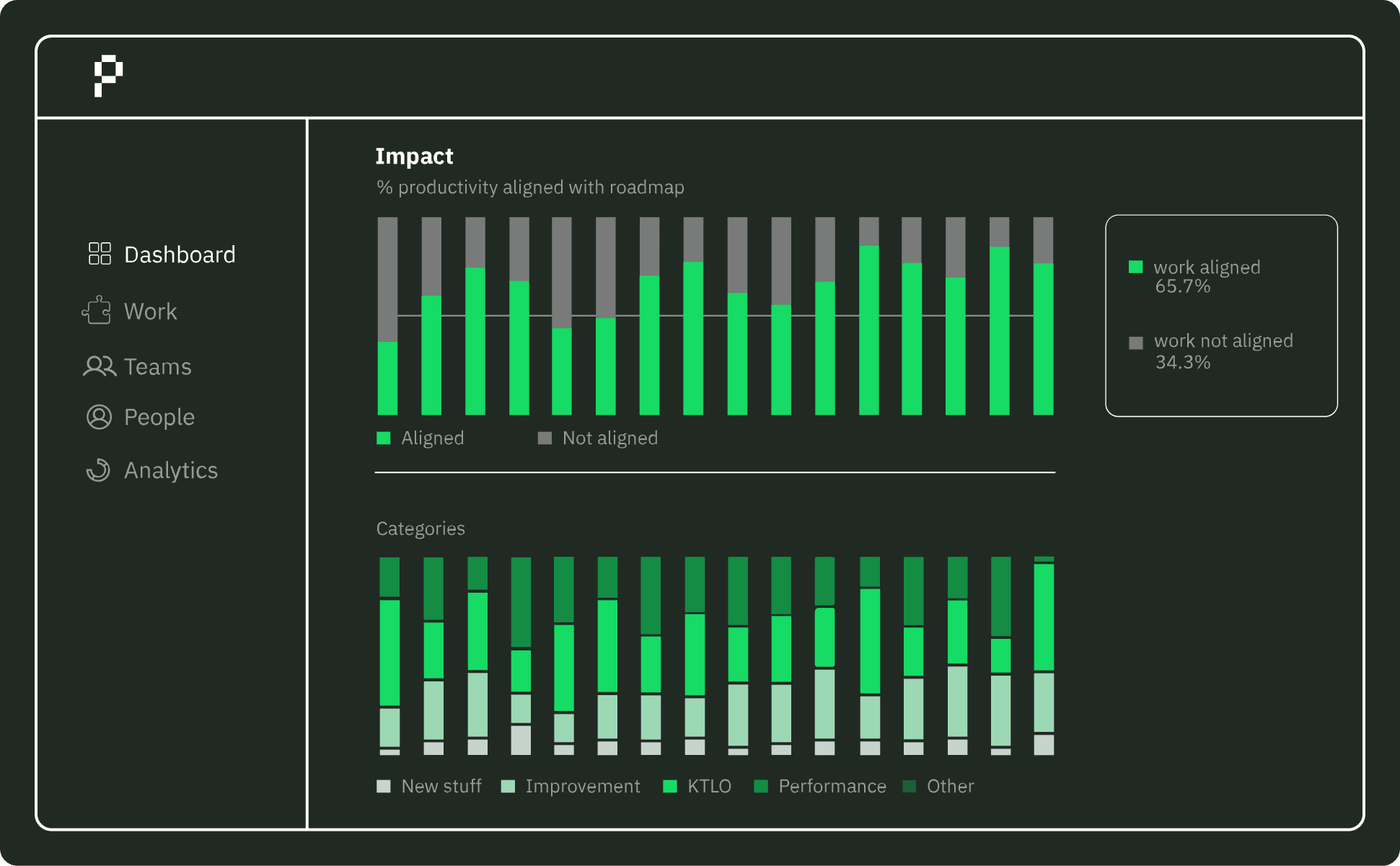
Value stream tools are designed to explain flow. But many engineering leaders are really looking for a simpler signal: how work is moving in reality, where it slows down, and whether progress is improving or stalling over time. The view below reflects that higher-level signal without requiring full value stream modeling.
Making the Right Choice

Oobeya built its platform around value stream management principles, bringing systematic workflow optimization to engineering intelligence. For organizations committed to value stream thinking and willing to invest in comprehensive workflow mapping, this approach provides structured improvement methodology.

But value stream management represents significant organizational investment. Mapping workflows, defining stages, measuring flow efficiency, and maintaining process models requires ongoing effort that many teams find disproportionate to the insights gained.

Pensero stands out by providing actionable intelligence immediately without requiring methodological adoption or extensive configuration. The platform's Executive Summaries, "What Happened Yesterday" visibility, and Body of Work Analysis deliver practical insights from day one.

Pensero helps you lead effectively by providing understanding rather than requiring process expertise. The platform reflects over 20 years of collective experience recognizing that engineering leaders need practical insights they can act on today, not comprehensive methodologies requiring organizational transformation.

Consider starting with Pensero's free tier to experience engineering intelligence that works immediately rather than after weeks of configuration and workflow mapping.

These are the best alternatives to Oobeya this year:

  1. Pensero

  2. LinearB

  3. Jellyfish

  4. Swarmia

  5. Haystack

  6. Sleuth

  7. Uplevel

  8. Waydev

Engineering leaders often discover Oobeya through its value stream management approach. The platform emphasizes visualizing software delivery workflows end-to-end, helping teams identify bottlenecks and optimize flow across the entire development lifecycle.

However, Oobeya's heavy focus on value stream mapping and flow metrics can feel complex when you need straightforward visibility into team work and progress. The platform's enterprise positioning and comprehensive workflow visualization may exceed what many teams actually require for effective engineering leadership.

Many engineering leaders need simpler solutions that provide clear insights without requiring extensive value stream configuration. They want to understand what their teams accomplished, identify real bottlenecks, and communicate progress effectively without becoming flow optimization specialists.

The fastest way to get there is agreeing on a small set of software development KPIs that reflect reality without creating reporting overhead.

This guide examines eight compelling alternatives to Oobeya, starting with platforms that deliver actionable insights without overwhelming complexity.

The 8 Best Alternatives to Oobeya

1. Pensero

Pensero provides comprehensive engineering intelligence without requiring value stream mapping or complex workflow configuration.

Built by a team with over 20 years of average experience in the tech industry, the platform delivers actionable insights immediately, recognizing that engineering leaders need clarity today, not after weeks of setup.

What makes Pensero different

While Oobeya requires mapping value streams and defining workflow stages, Pensero automatically generates insights from your existing tools. The platform understands engineering work patterns without requiring you to configure delivery pipelines or define process stages.

This fundamental difference matters enormously for implementation speed and ongoing maintenance. You get intelligence without becoming a flow optimization specialist.

Key capabilities

  • "What Happened Yesterday" provides daily visibility into team activity that Oobeya's value stream focus misses. You see what your team actually accomplished today in plain language, not as flow through predefined workflow stages.

  • Body of Work Analysis assesses actual engineering output over time without requiring value stream mapping. This provides practical understanding of team productivity that serves leadership decisions without methodological overhead.

  • Executive Summaries automatically generate iteration and sprint summaries in plain language. No value stream diagrams. No flow efficiency calculations. Just clear communication of what got done and what matters.

  • AI Cycle Analysis helps you understand how AI coding tools impact team workflow with insights you can act on immediately, not comprehensive workflow reengineering recommendations requiring organizational change.

  • Industry Benchmarks provide comparative context for team performance without requiring you to benchmark your value stream maturity or flow efficiency against abstract models.

What you need to know

  • Integrations: GitHub, GitLab, Bitbucket, Jira, Linear, GitHub Issues, Slack, Notion, Confluence, Google Calendar, Cursor, Claude Code

  • Notable customers: Travelperk, Elfie.co, Caravelo

Why Pensero should be your first choice

Oobeya brings value stream management methodology to engineering intelligence. But if your primary need is understanding your team's work clearly without adopting comprehensive flow optimization frameworks, Pensero provides actionable intelligence immediately.

The platform respects your time by delivering insights without requiring you to become a value stream expert, configure complex workflows, or maintain elaborate process maps.

2. LinearB

LinearB brings comprehensive delivery metrics and workflow automation with practical focus on bottleneck identification and optimization.

With 140 employees and significant backing from Tel Aviv, the platform provides DORA metrics and workflow insights without requiring formal value stream mapping.

What it does well

LinearB identifies workflow bottlenecks and optimization opportunities through data analysis rather than requiring upfront value stream configuration. Teams that already work in sprints often pair this with lightweight agile metrics to keep delivery predictable without adding more process.

The platform finds inefficiencies automatically by analyzing actual work patterns.

Workflow automation features help optimize processes the platform identifies as problematic. This practical approach focuses on fixing real bottlenecks rather than achieving theoretical flow efficiency.

Recent AI features include automated PR descriptions and AI-powered code reviews that improve workflow without comprehensive process reengineering. The incremental optimization approach suits teams wanting practical improvements over methodological transformation.

What you need to know

  • Best for: Teams wanting practical bottleneck identification and workflow optimization without formal value stream mapping

  • Integrations: GitHub, GitLab, Bitbucket, Jira, Slack, and essential development tools

  • Target audience: Organizations with 50+ engineers

The platform provides workflow insights similar to Oobeya's but without requiring adoption of comprehensive value stream management methodology.

3. Jellyfish

Jellyfish provides enterprise-grade engineering intelligence with resource allocation and investment tracking that shows workflow from business perspective rather than technical process view.

With 252 employees and substantial backing, the platform serves larger organizations needing to understand engineering work in business terms.

What it does well

Jellyfish tracks where engineering effort goes by initiative, product line, and work type without requiring value stream mapping. The business-oriented view shows resource allocation and investment distribution that matters for executive communication.

For engineering leaders needing to explain engineering progress in business terms rather than workflow efficiency metrics, Jellyfish provides the context and communication tools that value stream platforms don't emphasize.

The DevFinOps capabilities connect engineering work to financial reporting and budget tracking, providing business alignment that technical workflow optimization misses.

What you need to know

  • Best for: Larger organizations (100+ engineers) needing business-oriented engineering intelligence without technical workflow complexity

  • Integrations: GitHub, GitLab, Bitbucket, Jira, Azure Boards, Azure Repos, Jenkins, CircleCI, PagerDuty, OpsGenie, Slack, MS Teams, Google Calendar, Office 365

  • Notable customers: Five9, PagerDuty, GoodRx, DraftKings, Priceline, Clari, Genesys

  • Worth noting: Jellyfish emphasizes business alignment and resource allocation over workflow optimization. The platform suits organizations needing executive communication over process improvement methodology.

4. Swarmia

Swarmia takes a developer-first approach to engineering intelligence that emphasizes practical team health and delivery metrics over formal workflow mapping.

The Helsinki and New York-based company provides delivery insights and team health metrics without requiring value stream configuration or process stage definitions.

What makes it different

Swarmia focuses on making engineering data accessible and actionable for teams rather than implementing formal workflow management methodologies. The platform provides DORA metrics and delivery insights through simplified presentation that teams understand immediately.

The developer-centric philosophy means less emphasis on comprehensive workflow visualization and more focus on practical insights that improve team effectiveness directly.

For organizations wanting delivery intelligence without adopting formal value stream management, Swarmia provides accessible metrics that inform decisions without methodological overhead.

What you need to know

  • Best for: Organizations prioritizing practical delivery insights and team health over formal workflow management

  • Worth noting: Swarmia deliberately simplifies workflow analytics compared to comprehensive value stream platforms. Teams wanting deep flow optimization may find the simplified approach insufficient, while others appreciate the reduced complexity.

5. Haystack

Haystack provides data-driven engineering intelligence with emphasis on cycle time analysis and productivity patterns without requiring formal value stream mapping.

The platform analyzes work patterns automatically, identifying bottlenecks and optimization opportunities through data rather than predefined workflow models.

What it offers

Haystack's approach focuses on measuring what actually happens rather than mapping ideal workflows. The platform identifies where time goes, what causes delays, and which patterns indicate problems through analysis of actual work data.

For teams wanting to understand and optimize their workflow without formal value stream management, Haystack provides practical insights based on real patterns rather than theoretical models.

The platform combines individual-level insights with team analytics, showing how personal work patterns affect overall team flow without requiring comprehensive workflow stage definitions.

What you need to know

  • Best for: Organizations wanting data-driven workflow insights without formal value stream methodology adoption

  • Worth noting: Haystack emphasizes analytical discovery of workflow patterns over prescriptive process models. The approach suits teams comfortable with data analysis over formal methodology implementation.

6. Sleuth

Sleuth focuses specifically on deployment and change management workflow with practical emphasis on release health and deployment impact.

The platform provides deployment-focused insights without requiring comprehensive value stream mapping across the entire development lifecycle.

What makes it different

Sleuth specializes in the deployment portion of the software delivery workflow, providing deep insights into that specific area rather than attempting comprehensive value stream management.

The focused approach means simpler implementation and clearer insights for the deployment workflow specifically. Teams get actionable deployment intelligence without mapping their entire development process.

For organizations where deployment represents the primary bottleneck or concern, Sleuth's specialized focus provides practical value without comprehensive workflow complexity.

What you need to know

  • Best for: Teams prioritizing deployment workflow optimization without comprehensive value stream management

  • Worth noting: Sleuth's deployment focus means complementary tools needed for broader engineering intelligence. The platform excels at its specialty but doesn't attempt comprehensive workflow coverage.

7. Uplevel

Uplevel provides engineering intelligence with unique emphasis on time allocation patterns and collaboration health alongside delivery metrics.

The platform analyzes how teams spend time without requiring formal workflow mapping, identifying productivity patterns through calendar and activity analysis.

What it offers

Uplevel's approach recognizes that workflow bottlenecks often involve time allocation and collaboration patterns rather than technical process stages. The platform identifies meeting burden, context switching, and collaboration inefficiencies through actual time data.

For teams where productivity challenges involve time management and collaboration health rather than technical workflow optimization, Uplevel provides practical insights that value stream platforms miss.

The calendar integration shows how time allocation affects output without requiring you to map development stages or define process gates.

What you need to know

  • Best for: Organizations concerned about time allocation patterns and collaboration health affecting workflow

  • Worth noting: Uplevel complements technical workflow analysis with time and collaboration insights. The platform works best alongside tools measuring delivery metrics directly.

8. Waydev

Waydev specializes in framework-driven dashboards implementing DORA and SPACE metrics with practical focus on delivery performance and team health.

Despite being a smaller operation, the platform provides structured analytics without requiring formal value stream mapping or comprehensive workflow configuration.

What it offers

Waydev implements established frameworks that measure delivery performance through standard metrics rather than custom value stream definitions. The framework approach provides structure without requiring extensive workflow configuration.

The platform combines delivery metrics with developer experience insights, recognizing that workflow effectiveness depends on both process efficiency and team health.

For teams wanting structured measurement without value stream complexity, Waydev provides framework-based analytics that balance simplicity with comprehensiveness.

What you need to know

  • Best for: Engineering managers wanting structured framework implementation without value stream methodology adoption

  • Integrations: GitHub, GitLab, Bitbucket, Jira, limited compared to enterprise platforms

  • Worth noting: Waydev emphasizes framework adherence over custom workflow mapping. The approach suits teams wanting established measurement approaches over comprehensive value stream management.

Why Teams Look Beyond Oobeya

Oobeya built its platform around value stream management principles, bringing DevOps flow optimization thinking to engineering intelligence. For organizations committed to value stream mapping and comprehensive workflow visualization, this approach provides genuine value.

But value stream management represents a specific methodology that not all teams adopt. The concepts of value stream mapping, flow efficiency, and workflow stage analysis require organizational buy-in and ongoing maintenance that many teams find burdensome.

Teams often look beyond Oobeya when they need:

  • Simpler insights without value stream complexity. Understanding what your team accomplished shouldn't require mapping entire delivery workflows and defining stage gates.

  • Immediate visibility into team work and progress. Many leaders need daily or weekly updates, not comprehensive flow analysis across the entire development lifecycle.

  • Clear stakeholder communication that works without explaining value stream concepts. Not every executive needs to understand flow efficiency metrics to grasp engineering progress.

  • Lower implementation overhead that doesn't require extensive configuration, workflow mapping, or ongoing maintenance to generate useful insights.

Value stream tools are designed to explain flow. But many engineering leaders are really looking for a simpler signal: how work is moving in reality, where it slows down, and whether progress is improving or stalling over time. The view below reflects that higher-level signal without requiring full value stream modeling.

Making the Right Choice

Oobeya built its platform around value stream management principles, bringing systematic workflow optimization to engineering intelligence. For organizations committed to value stream thinking and willing to invest in comprehensive workflow mapping, this approach provides structured improvement methodology.

But value stream management represents significant organizational investment. Mapping workflows, defining stages, measuring flow efficiency, and maintaining process models requires ongoing effort that many teams find disproportionate to the insights gained.

Pensero stands out by providing actionable intelligence immediately without requiring methodological adoption or extensive configuration. The platform's Executive Summaries, "What Happened Yesterday" visibility, and Body of Work Analysis deliver practical insights from day one.

Pensero helps you lead effectively by providing understanding rather than requiring process expertise. The platform reflects over 20 years of collective experience recognizing that engineering leaders need practical insights they can act on today, not comprehensive methodologies requiring organizational transformation.

Consider starting with Pensero's free tier to experience engineering intelligence that works immediately rather than after weeks of configuration and workflow mapping.

Know what's working, fix what's not

Pensero analyzes work patterns in real time using data from the tools your team already uses and delivers AI-powered insights.

Are you ready?

To read more from this author, subscribe belowโ€ฆ