Code Quality

Keep quality as delivery grows

Pensero shows defects, rework and review load next to every delivery point, by source: team, provider or agent.

The Delivery Point™. Used at 200+ organizations.

  • Internet Brands
  • WebMD
  • Perk
  • ClosedLoop
  • Stord
  • Tuio
  • Persuit
  • SEAT CODE
  • Elfie
  • Caravelo
  • ShopMy
  • iAhorro
  • Hum Capital
  • Exoticca

What speed is actually costing you

Find the patterns behind bugs

Defect cost traced to the change that introduced it, including agent work a human directed and provider work.

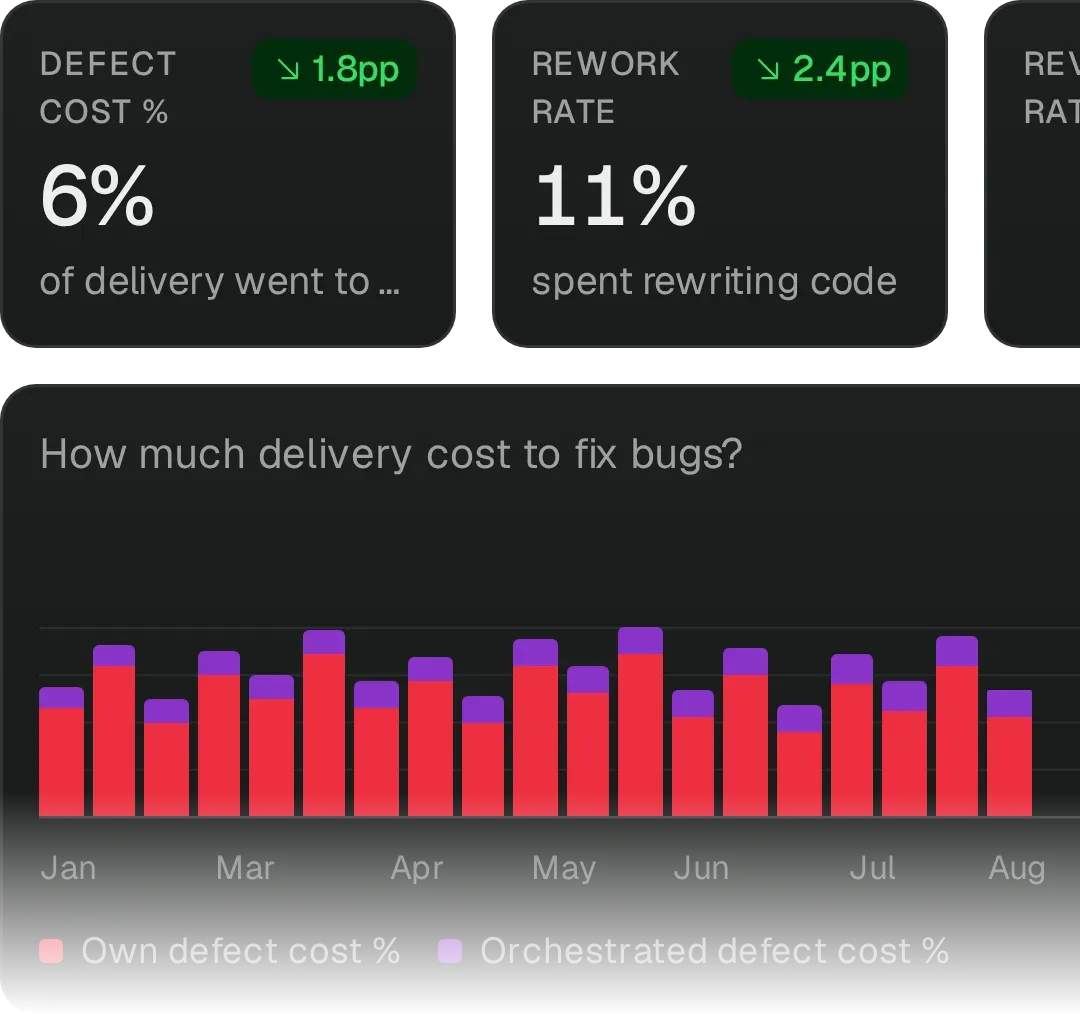
Pensero Quality tax with example data: defect cost 6%, rework rate 11% and revert rate 1.4%, and the weekly share of delivery that went to bug fixes.

Measure the cost of fixing

See the capacity lost to rework and reverts, and which AI or provider spend made work that was redone. Reverted work earns no points.

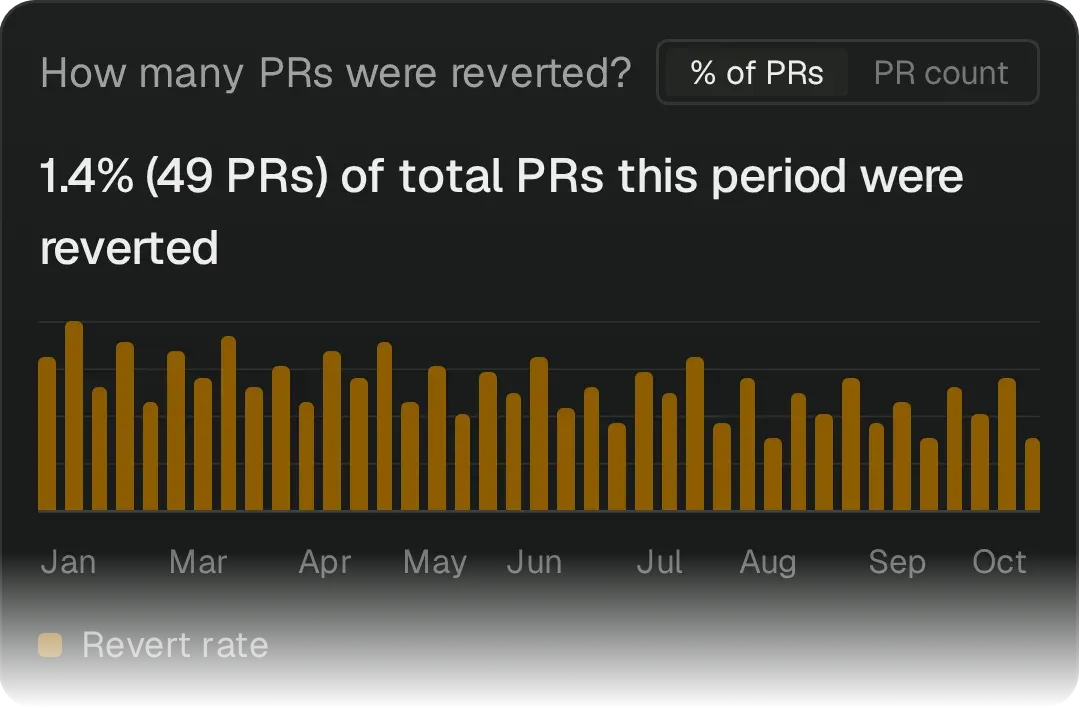
Pensero revert rate chart with example data: 1.4% of PRs this period were reverted, down from about 2% in January.

Review load is the hidden cost of speed

Agents open more pull requests and senior engineers absorb the review. Pensero measures that load as real capacity.

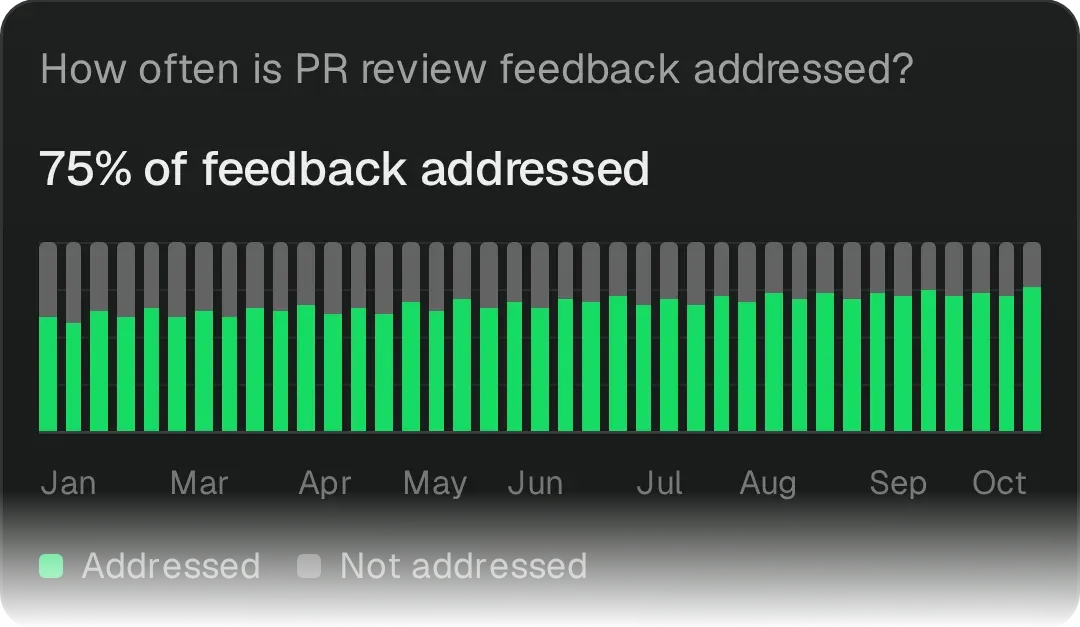
Pensero PR review feedback chart with example data: 75% of review feedback was addressed this period, up from 61% in January.

Where humans and agents meet

Map who reviews whose code, where knowledge flows and whether agent-written code gets enough human review.

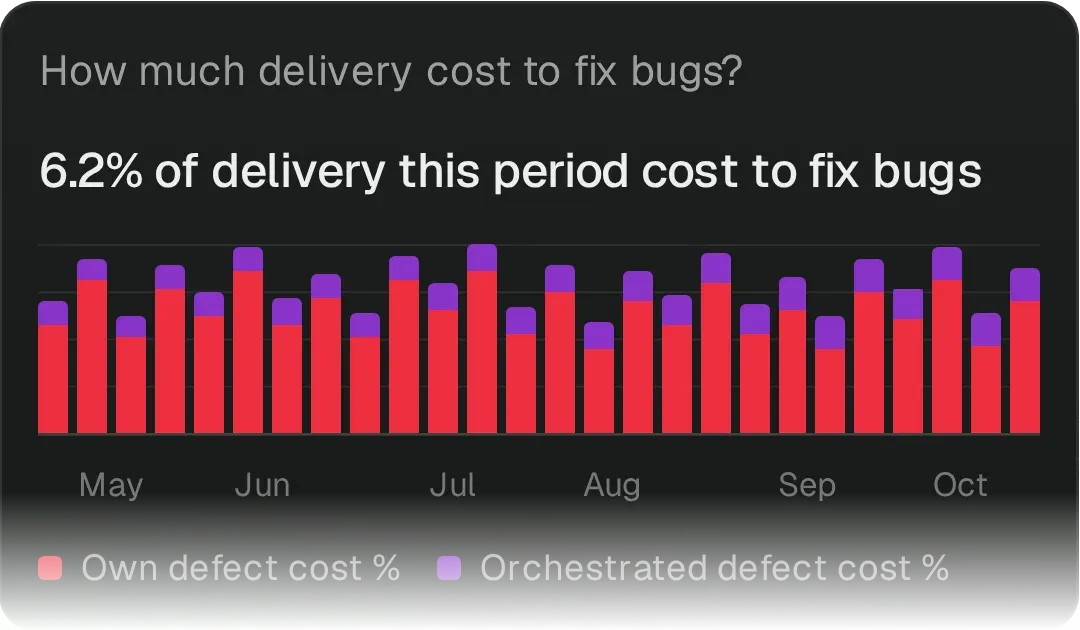
Pensero AI quality chart with example data: 6.2% of delivery this period went to fixing bugs, split into own and orchestrated agent defects, while 79.8% of active developers are AI-assisted.
  • “Now we went from 70% to 30% maintenance… it’s where we want it to be.”
    Ignasi VegasCEO and Co-founder, CubboRead story →
  • “Are we using AI, is it accelerating us and are we still delivering quality code?”
    Nick TraylorHead of Engineering, StordRead story →
  • “With Pensero we go 4x faster.”
    Andrew EyeCEO and Founder, ClosedLoopRead story →
  • “One of the key signals was delivery points per headcount.”
    Justin NguyenDirector of Engineering, PersuitRead story →
  • “We need a way that is objective to see that we’re increasing productivity.”
    Jordi AbadCTO, SEAT CODERead story →

Questions engineering leaders ask

How is this different from static analysis or code-quality scanners?

Static tools scan code line by line. Pensero measures quality across teams, providers and time, connecting defects, rework and review depth to delivery points, so you see the patterns behind production risk.

Can Pensero tell whether AI-generated code is properly reviewed?

Yes. Pensero separates human, AI-assisted and agent work and ties each to quality and rework, so you see whether AI-assisted code gets real review.

Does measuring rework and review depth add process for my engineers?

No. Pensero reads your existing code, tickets, reviews and workflow data, with no surveys and no manual reporting.

Why does weighting by difficulty matter for quality?

Not all shipped work is equally hard, and AI has widened that gap. Pensero weights work by difficulty, so faster delivery is not mistaken for better quality and rising rework shows up early.

How do we start?

Connect your tools. Your quality and rework history is available from day one.